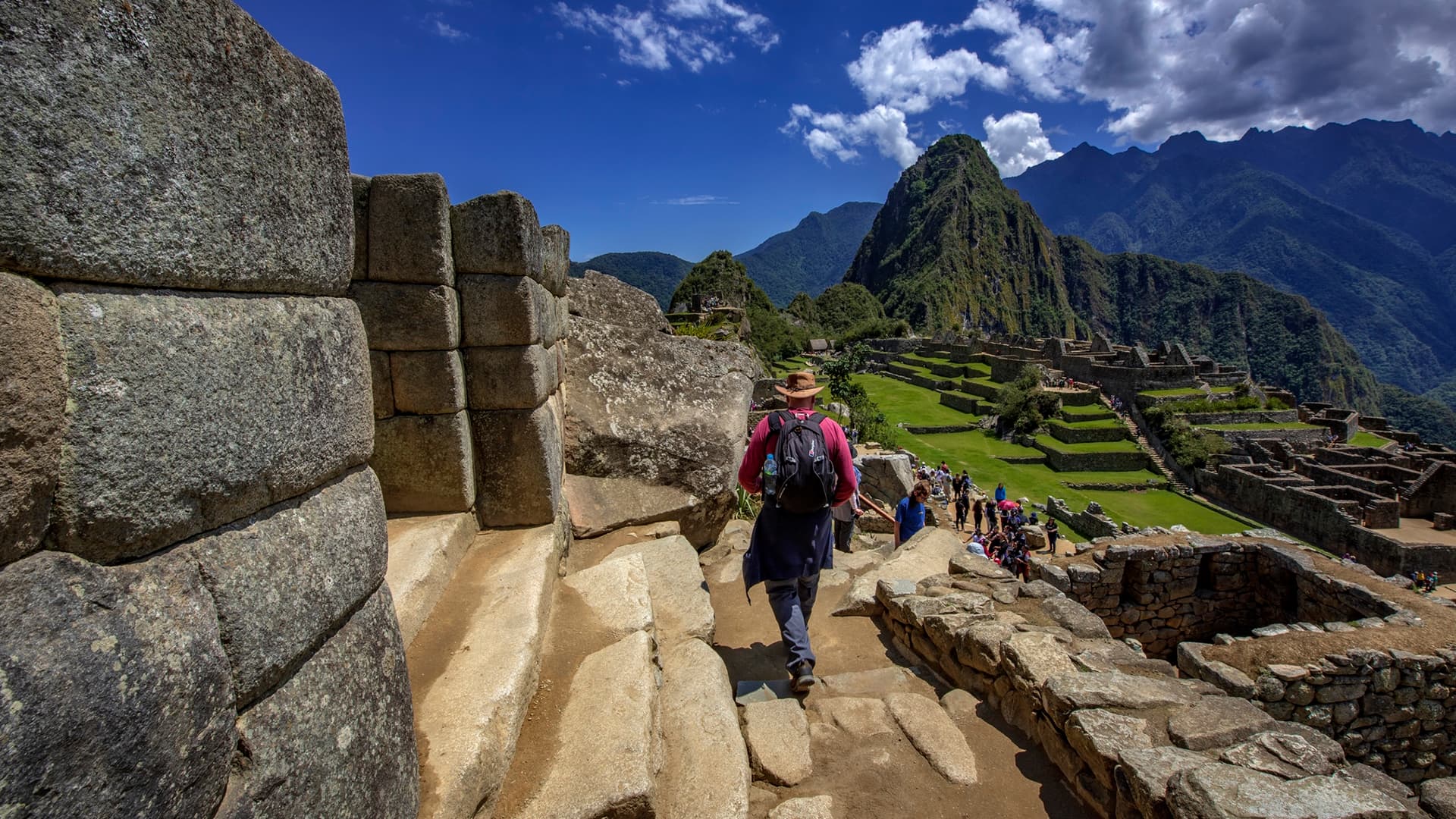
Visiting Machu Picchu requires understanding a multi-circuit ticketing system that operates with strict capacity limits and time-slot enforcement. This guide synthesizes official pricing, ticket categories, and critical fraud prevention strategies to help visitors secure legitimate access while avoiding the counterfeit schemes and unlicensed operators that persistently target tourists in the Cusco region.
Machu Picchu Ticket Types & Circuits
Machu Picchu operates an advanced circuit system designed to manage visitor flow and preserve the archaeological site. Rather than offering a single generic entry ticket, the site divides access across three primary circuits with multiple route options, each offering distinct views and experiences.
Circuit 1: Panoramic Route
Circuit 1 focuses on upper-terrace views and encompasses four distinct routes available in 2025-2026. The most accessible option, Route 1-B (Upper Terrace), requires only two hours and provides the iconic postcard photo of Machu Picchu from the vantage point near the guardhouse. This route accommodates approximately 1,400 daily visitors and costs 152 soles (~$43 USD) for foreign adults.
Route 1-A, the Machu Picchu Mountain route, ascends 4.5 hours round trip and delivers the most comprehensive panoramic experience. This route costs 200 soles (~$60 USD) and remains available year-round with only two entry times (08:00 and 10:00), making it ideal for sunrise or golden-hour photography.
Routes 1-C (Intipunku/Sun Gate) and 1-D (Inka Bridge) are seasonal offerings available only during high season (June-September). The Intipunku route replicates the historic Inca Trail experience by accessing the Sun Gate, while the Inka Bridge route combines archaeology with a scenic walk through tunneled passages carved into cliff faces. Both cost 200 soles and accommodate around 400 visitors daily.
When to choose Circuit 1: Photographers prioritizing iconic images, visitors with limited time (two hours to full day), and those seeking upper-elevation views without descending to the main urban sector.
Circuit 2: Classic Citadela Inka (Full Tour)
Circuit 2 represents the most comprehensive Machu Picchu experience, covering both upper terraces and the full urban sector where the primary temples, plazas, and ceremonial structures are concentrated. This circuit includes the Temple of the Sun, Temple of the Condor, Sacred Plaza, Intiwatana (the carved ritual stone), and the Main Gate.
Circuit 2 carries 2,300 daily capacity during high season, yet sells out first because it is the only ticket type granting complete access to the citadel’s ceremonial and residential zones. Pricing ranges from 172-200 soles depending on visitor category and booking timing. Multiple entry slots span 08:00 to 14:00 daily, providing flexibility for travelers coordinating train schedules and guide arrivals.
The route requires most of a full day for thorough exploration—typically 4-6 hours—yet visitors can spend as little as 2-3 hours if time is constrained. No hiking component is required, making it accessible to visitors across fitness levels.
When to choose Circuit 2: First-time visitors, those seeking the “authentic” Machu Picchu experience with complete coverage, and travelers without significant hiking experience.
Circuit 3: Urban & Royalty Routes (with Optional Hikes)
Circuit 3 emphasizes the lower urban sector, royal residential areas, and ceremonial structures. The primary distinction from Circuit 2 is the exclusion of certain upper-terrace views; however, Circuit 3 compensates by offering integrated hiking options unavailable in other circuits.
Route 3-A: Huayna Picchu Hike is the most famous add-on, featuring steep carved stone steps and a challenging 4-hour round trip. Only 400 visitors daily are permitted. The hike culminates at a peak directly above the main citadel, providing the aerial perspective visible in countless Machu Picchu photographs. Huayna Picchu costs 200+ soles and requires advance booking 2-4 months in high season due to extreme scarcity.
Route 3-C: Grand Cavern (Temple of the Moon) is a longer, less crowded alternative available only in high season. This 4-hour round trip ascends to a carved cave temple with less technical difficulty than Huayna Picchu, making it suitable for fit but less experienced hikers.
Route 3-D: Huchuy Picchu represents the newest and most accessible hiking option, featuring a gentle 30-60 minute ascent with 200-300 spaces daily. This route is explicitly designed for families, seniors, and casual hikers, with modest elevation gain and significantly lower injury risk than Huayna Picchu. Pricing is approximately 152+ soles.
When to choose Circuit 3: Adventure-seeking visitors, those with hiking experience or fitness aspirations, families with children over 12 (for Huchuy Picchu), and photographers targeting aerial perspectives of the citadel.
Official Pricing & Cost Structure
Machu Picchu’s pricing system is standardized by the Peruvian Ministry of Culture and published on the official government ticketing platform (tuboleto.cultura.pe). However, pricing varies based on visitor origin, age category, and specific circuit selection.
| Visitor Category | Standard Entry (Soles) | With Hike/Mountain (Soles) | USD Equivalent |
|---|---|---|---|
| Foreign Adults | 152-172 | 200 | $43-60 |
| Peruvian Nationals & CAN Members[a] | 64-80 | 90-110 | $18-30 |
| Residents of Cusco | Substantially reduced | — | Variable |
| Children (3-17) | 70-90 | — | $20-26 |
| Students (with valid ID, under 25) | 70-90 | — | $20-26 |
[a] CAN (Andean Community) members include residents of Peru, Colombia, Ecuador, and Bolivia.
Price Variations by Circuit (2025-2026)
- Circuit 1-B (Upper Terrace, no hike): 152 soles
- Circuit 1-A (Machu Picchu Mountain): 200 soles
- Circuit 1-C & 1-D (Intipunku & Inka Bridge): 200 soles
- Circuit 2 (Full Citadela): 172-200 soles (varies by seasonality and currency fluctuations)
- Circuit 3 + any hike (Huayna, Grand Cavern, Huchuy): 200+ soles
The Ministry of Culture implements these prices consistently across all official distribution channels. Any significant variation (e.g., 20-30% above official rates) is a strong indicator of third-party reseller markup, counterfeit schemes, or unlicensed operators.
How to Purchase: Official Channels Only
Primary Channel: tuboleto.cultura.pe
The Peruvian Ministry of Culture’s official platform launched August 3, 2024, and is now the primary ticketing system. This government-operated website integrates with national identity databases (RENIEC), immigration records (Migraciones), and cultural heritage systems to ensure ticket authenticity and visitor management.
Registration & Booking Process:
- Visit tuboleto.cultura.pe and select “Iniciar Sesión” (Login)
- Create an account with valid passport/national ID and email
- Verify email through confirmation code sent to inbox
- Select “Llaqta Machupicchu,” desired circuit, specific route, date, and entry time
- Complete payment via international Visa/Mastercard or through Banco de la Nación (if in Peru)
- Download ticket immediately upon confirmation; screenshot or print for entrance presentation
Advantages of this channel:
- Government-backed authenticity (zero counterfeiting risk)
- Direct integration with Ministry of Culture records
- Receipt and email confirmation trail (critical for dispute resolution)
- No middleman commissions or hidden fees
- Flexible modification window (within certain constraints)
Booking Timeline (2026 example):
- Travel dates Jan 1-5, 2026: Open for booking Nov 17-18, 2025
- Travel dates Jan 6-31, 2026: Open for booking Jan 3, 2026
- Travel dates Feb 2026: Open for booking Jan 12, 2026
- Rolling schedule continues for all subsequent months
High-demand dates (particularly June-August and Christmas/New Year) often sell out within 72 hours of opening. Early booking is not merely recommended—it is essential for visiting during peak season.
Contact for assistance: tuboleto@cultura.gob.pe | Hours: 8:00 AM – 10:00 PM daily (Spanish language support).
Secondary Channel: In-Person Purchase in Aguas Calientes
For visitors who arrive without advance tickets, the Ministry of Culture office in Machu Picchu Pueblo (Aguas Calientes) sells up to 1,000 tickets daily for entry the following day only. This is a critical backstop for last-minute travelers, though it carries several disadvantages.
Purchase Details:
- Location: Avenida Pachacutec, Aguas Calientes
- Hours: 5:00 AM – 10:00 PM daily (arrive early; queues form by 3:00 AM during high season)
- Requirements: Passport or national ID (personal, non-transferable)
- Payment: Cash (Peruvian soles) or credit card
- Caveat: Only 1,000 tickets distributed across all circuits, meaning popular options (Circuit 2, Huayna Picchu) frequently sell out by mid-day
Risks of this approach:
- Exposure to street vendors and fake ticket sellers who operate near the official office
- Physical queuing (witnessed accounts report 3.5-hour waits to receive queue numbers for tickets; additional 5-6 hour waits for official processing)
- No advance commitment; travelers may arrive without guaranteed entry
- Minimal refund recourse if issues arise
This channel is viable only for flexible travelers with time buffers and backup destination plans.
Tertiary Channel: Authorized Tour Operators
Licensed tour operators appearing on the official Machu Picchu website’s approved vendor list can purchase tickets on behalf of clients. This approach is most useful for travelers without international credit cards, non-Spanish speakers, or those uncomfortable navigating the online platform.
Cost: Typically $5-10 USD surcharge per ticket above official rates.
Verification: Before using a tour operator, confirm their listing on the official Machu Picchu website’s approved vendor list. Any operator claiming to hold “secret inventory” or offering discounted rates should be avoided entirely.
Scams & Fraud Prevention: Critical Strategies
The Cusco region has become a hotbed of Machu Picchu-related scams. Of approximately 810 registered tour agencies in Cusco, roughly 650 operate without valid business licenses, creating an accountability vacuum. These unlicensed operators generate counterfeit tickets, take advance payments and disappear, or hire guides who pocket customer funds and vanish.
Common Scam Typologies
1. Fake Travel Agencies
Operators with attractive websites, social media profiles, and verbal assurances of “special discounts” collect advance payments ($200-500) and either deliver counterfeit tickets or cease communication entirely. A documented case involved an agency that accepted payment for a complete Machu Picchu package (transportation, lodging, entrance, guide), only to ghost the client in Cusco, forcing the traveler to rebuild the entire itinerary independently.
2. Counterfeit Tickets
Street vendors and unlicensed guides have been caught distributing fake tickets printed at high quality but unrecognized by Ministry of Culture systems. Tourists arrive at the entrance, scan or present their ticket, and are denied entry—with no recourse because the transaction occurred off-record with an untraceable vendor. In one 2023 incident, three American tourists were detained after attempting entry with counterfeit tickets sold by a fake “freelance guide.”
3. Last-Minute Unsolicited Offers
Street vendors in Cusco and Aguas Calientes approach tourists with propositions: “Machu Picchu tomorrow for $80 (vs. $40 official price)” or “I have Circuit 2 tickets that just became available.” These are almost uniformly scams. The vendor either has no tickets, provides counterfeits, or the tickets are for a different date/time than promised.
4. Guide Abandonment
Travelers book guides through agencies, prepay, and the guide either disappears before the tour or vanishes mid-trip with travel documents and remaining funds. One traveler documented disappearing guides who refused to provide promised entry tickets, forcing the client to queue independently in Aguas Calientes.
5. In-Person Ticket Line Fraud
Non-official ticket sellers position themselves near the legitimate Ministry of Culture office in Aguas Calientes, preying on queue confusion. They offer to “facilitate” the transaction for a fee or sell “reserved” tickets at above-official rates. Given the chaotic nature of 3.5-7 hour queues, tourists often cannot verify legitimacy until after money is handed over.
Protection Checklist
✅ Before Booking:
- Purchase exclusively from tuboleto.cultura.pe (government platform) or authorized tour operators listed on the official Machu Picchu website
- Never use third-party ticketing sites or street vendors
- Verify any tour operator has a physical office, professional website, and verifiable business registration with DIRCETUR Cusco (Regional Tourism Authority)
- Research on TripAdvisor and Google Reviews—look for consistent 4+ star ratings from recent visitors (2024-2025); ignore agencies with fewer than 20 reviews or mixed ratings
- Request business registration documentation before paying
✅ Payment Methods:
- Use credit/debit cards exclusively (no cash to street vendors)
- If paying via agency, request itemized invoice with entry date, circuit, entry time, and passenger names matching your IDs
- Keep all receipts and confirmation emails
- Never pay for “rush fees,” “administrative charges,” or “reservation guarantees” beyond official ticket prices
✅ Verification Steps:
- Confirm booking details on tuboleto.cultura.pe or request the official confirmation email from the agency
- Match ticket information (date, circuit, entry time) to your train schedule and guide reservation
- Bring physical passport or national ID matching the name on your ticket
- Screenshot or photograph all booking confirmations and payment receipts
- Check the official Machu Picchu website’s approved vendor list before departure
✅ Red Flags—Walk Away Immediately:
- Prices significantly below official rates (e.g., $20 tickets when official price is $40-60)
- “Guaranteed” high-demand tickets (Huayna Picchu or Circuit 2) offered instantly during high season
- Pressure to pay cash immediately or “hold” the ticket
- Vague business details, no verifiable office address, or website-only presence
- Requests to wire money via Western Union or international bank transfer
- Guides pressuring you to commit to add-on purchases or tours
- Reluctance to provide written confirmation or itemized receipts
Government Resources & Complaint Channels
If scammed, Peruvian law provides recourse through consumer protection agencies:
iPeru (iPeru.gob.pe): Government-funded tourism information service that maintains complaint records on unlicensed tour operators. Check this site before booking any agency; complaints are visible and searchable by operator name.
INDECOPI (Consumer Protection Agency): Files formal complaints for deceptive commercial practices, unresolved service issues, and payment disputes. A victim of hidden fees or non-delivery of services can document the incident (email communications, receipts) and file with INDECOPI, potentially recovering damages.
Ministry of Culture Complaint Line: Contact tuboleto@cultura.gob.pe or the official Machu Picchu ticketing office with evidence of fraudulent tickets or unauthorized seller activity.
Booking Strategy: Timing & Availability
Ticket scarcity is a fundamental driver of scams. Understanding demand patterns and booking windows separates successful visitors from frustrated ones.
Seasonal Demand Tiers
High Season (June-August, Dec 25-Jan 5):
- Book 2-4 months in advance
- Circuit 2 and hiking tickets sell out within 72 hours of opening
- All morning entry slots (before 11:00 AM) typically unavailable 2+ weeks before travel
- Alternative: Book afternoon slots (12:00 PM – 2:00 PM) or sacrifice Circuit 2 for Circuit 1 or 3
Shoulder Season (April, September-October):
- Book 1-2 months in advance
- Wider availability across circuits and entry times
- More flexibility with hiking options
- Better weather than low season (dry months)
Low Season (November-March, excluding Christmas):
- Book 2-4 weeks in advance
- Tickets rarely sell out completely
- Watch for rain on hiking days (seasonal slippery conditions)
- Significantly fewer tourists; quieter experience
Cancellation Monitoring Strategy
Cancellations occur continuously as travelers modify plans. The official system releases cancelled tickets 72+ hours before the entry date. Persistent daily checking can yield access to high-demand options even after “sold out” appears on the main availability calendar. This strategy requires:
- Setting daily reminders to check tuboleto.cultura.pe at 9:00 AM and 3:00 PM local time
- Maintaining a flexible destination backup (e.g., Sacred Valley tours if Machu Picchu unavailable)
- Having alternative circuit choices ranked (e.g., Circuit 1-A if Circuit 2 unavailable)
- Booking immediately upon finding availability (within seconds, as cancellation inventories sell out rapidly)
Critical Policies & Constraints
Understanding Machu Picchu’s rigid ticketing rules prevents costly mistakes and disappointment.
Non-Transferability & Accountability: Each ticket is personal and non-transferable. Entry requires photographic ID matching the passenger name on the ticket. This policy exists to prevent black-market resale and enforce capacity limits, but it also means spouses, children, or friends cannot use a ticket purchased under another person’s name.
Strict Time-Slot Enforcement: Tickets are valid only for the specified entry date and time slot (e.g., “April 15, 2026, 09:00 entry”). Arriving significantly late (typically 30+ minutes) may result in denied entry without refund. Travelers must account for transportation delays and altitude adjustment time.
No Re-Entry: Exiting the site forfeits ticket validity. Visitors cannot leave for a meal and re-enter. Plan the full visit duration (4-8 hours depending on circuit) as a continuous experience.
Non-Refundable & Non-Modifiable: Once booked, tickets cannot be cancelled for refund or modified for different dates. The only exception is Ministry of Culture-declared force majeure (e.g., natural disaster closing the site). If circumstances change, the traveler absorbs the loss.
Altitude Considerations: Machu Picchu sits at 11,500 feet (3,500 meters). Visitors flying in from sea level should spend 1-3 days acclimatizing in Cusco (11,150 feet) before ascending further. Altitude sickness is genuine; arriving directly from low elevation and attempting challenging hikes (Huayna Picchu, Grand Cavern) increases illness risk significantly.
Practical Recommendations by Traveler Profile
First-Time International Visitor with Limited Spanish:
- Book Circuit 2 (full experience) on tuboleto.cultura.pe 2-3 months in advance
- Schedule entry for 08:00 or 09:00 (morning light, fewer crowds)
- Hire a professional guide through an authorized operator (adds context and prevents navigation confusion)
- Allocate 6-7 hours on-site
- Skip hiking options; Circuit 2 alone provides complete coverage
Adventure Hiker with Fitness Experience:
- Prioritize Circuit 3 + Huayna Picchu or Circuit 3 + Grand Cavern Route
- Book 4 months in advance for high-season travel
- Enter at 07:00 for hiking slots
- Bring proper hiking boots (mandatory for Huayna; strongly recommended for others)
- Allow 6-8 hours total (citadel + hike)
Family with Children (Ages 5-12):
- Choose Circuit 3 + Huchuy Picchu or Circuit 2 alone (no hiking)
- Book afternoon entry (12:00-14:00) to ease early-morning transitions
- Allocate 4-5 hours; children fatigue on longer circuits
- Skip Huayna Picchu entirely (steep, narrow, high risk)
Budget-Conscious Traveler with Flexibility:
- Visit during low season (November-March, excluding holidays)
- Book Circuit 1-B (Upper Terrace, shortest/cheapest option) 2-4 weeks in advance
- Arrange last-minute accommodation in Aguas Calientes with fallback ticket purchase option
- Cost typically $30-50 total vs. $60-100 high-season premium
Machu Picchu’s ticketing system is intentionally rigid to preserve the site’s integrity and manage the 1.2 million annual visitors. This rigidity simultaneously creates scarcity, opportunity for fraud, and complexity for travelers. The single most effective protective measure is booking exclusively through tuboleto.cultura.pe, the government platform, eliminating middlemen, counterfeiting risk, and fraud exposure entirely.
Understanding ticket types (Circuits 1-3 and their routes) allows visitors to select experiences matching their time, fitness, photography goals, and budget. Advance booking by 2-4 months during peak season is non-negotiable. Any offer deviating significantly from official pricing, any unsolicited street vendor, and any operator lacking verifiable licensing and positive independent reviews should be declined without exception.
By following these guidelines—official-channel booking, advance planning, and verified vendor selection—travelers can confidently secure authentic tickets and allocate cognitive and financial resources to the archaeological and cultural experience itself rather than scam prevention or last-minute logistics scrambles.