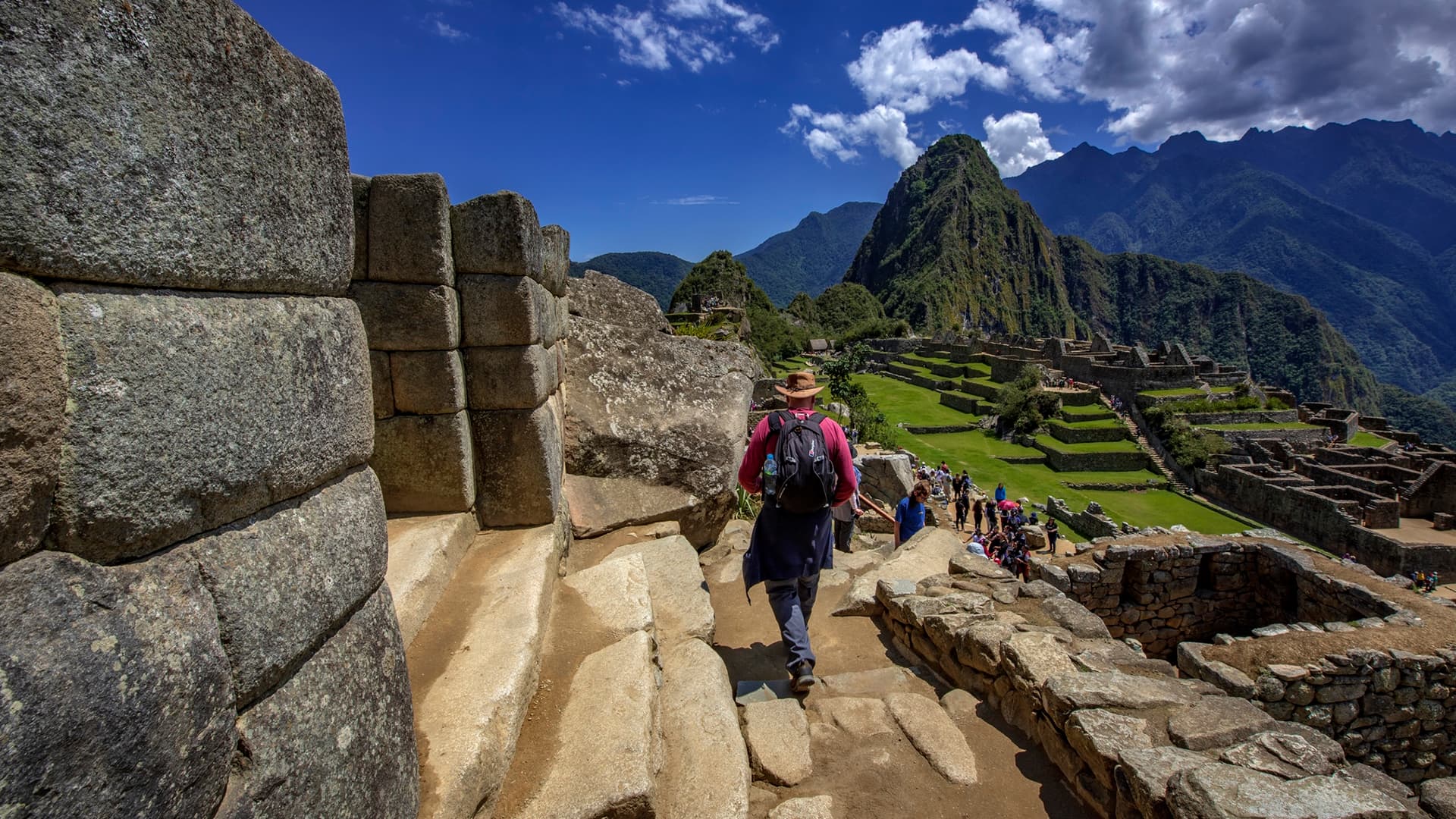
International travelers seeking authentic experiences at Machu Picchu have evolved well beyond basic sightseeing—the market now offers sophisticated alternatives ranging from one-day convenience packages to transformative multi-day treks. This guide synthesizes current offerings, pricing, and operator quality to help discerning travelers select the optimal package for their priorities and constraints.
Tour Package Categories and Options
Express Options for Time-Constrained Travelers
For visitors with limited availability, full-day train tours departing from Ollantaytambo offer the most efficient experience. These packages, priced from $379 USD, include round-trip train transportation and typically 2-3 hours of guided exploration at the citadel itself, requiring only modest walking ability (approximately 1-2 hours on uneven terrain). Yapa Explorers and comparable operators handle logistics entirely, departing early morning and returning by evening—suitable for travelers integrating Machu Picchu into broader Peru itineraries.
Two-day packages with overnight accommodation in Aguas Calientes ($354-$399 USD) provide substantive improvement in experience quality. These permit either full-day independent exploration or a relaxed morning visit after acclimatization sleep. When combined with Sacred Valley tours—another UNESCO World Heritage region—packages reach $399 USD and deliver dual-site coverage without excessive fatigue.
Trekking Options for Active Explorers
The four-day Classic Inca Trail remains the archetypal experience, priced from $755 USD, and involves 3-4 hours daily hiking through cloud forest ecosystems with archaeological sites visible en route. The trail culminates at the iconic Sun Gate overlook, permitting Machu Picchu entry at sunrise—a symbolic climax unavailable to day-trippers. However, permits remain strictly controlled; advance booking of 6-8 months is mandatory, and only 500 permits issue daily. This constraint, while protecting environmental integrity, effectively prices late-planners out of the most iconic route.
Alternative treks address both timing and crowding concerns. The five-day Salkantay Trek ($469-$479 USD) traverses dramatic snow-capped mountain passes and cloud forest transitions without the permit bottleneck. Physical demands exceed the Inca Trail on high-altitude sections (Salkantay Pass reaches 15,200 feet), but the route remains less crowded and accommodates later bookings. Yapa Explorers’ two-day Short Inca Trail ($549 USD) represents a hybrid approach—one day of actual trail hiking from KM104 junction, followed by Machu Picchu entry via the historic Sun Gate route, then exploration the next morning.
Luxury Experiences
The Belmond Hiram Bingham luxury train ($450-$750 USD per direction, round-trip therefore $900-$1,500) positions itself as an entirely distinct category. The service operates vintage 1920s Pullman carriages with observation cars, white-tablecloth dining featuring multi-course gourmet menus, premium wine selections, and live traditional Peruvian music. The journey itself becomes the primary experience rather than a mere conveyance. Critically, entrance to Machu Picchu is not included and must be booked separately—an oversight frequently missed by upscale travelers. The train operates Tuesday through Sunday (not Monday) and requires separate booking from the citadel entry.
| Tour Type | Duration | Price (USD) | Best For | Physical Demand |
|---|---|---|---|---|
| Full Day Train | 1 day | $379 | Time-constrained visitors | Minimal (walking only) |
| 2-Day with Stay | 2 days | $354-399 | Comfort-focused exploration | Minimal to light |
| 2-Day Short Trail | 2 days | $549 | Combined trekking + citadel | Moderate |
| 4-Day Classic Trail | 4 days | $755 | Signature experience | Challenging |
| 5-Day Salkantay | 5 days | $469-479 | Advanced trekkers | Very challenging |
| Belmond Train (luxury) | 1 day | $450-750 | Luxury rail experience | Minimal |
Top-Rated Operators: Qualitative Assessment
Alpaca Expeditions stands among the most consistently praised specialists, with multi-year positive reviews emphasizing guide professionalism, porter welfare, and gourmet field cooking that surprises trekkers expecting trail rations. The company enforces ethical labor practices and sustainability standards visibly; porters visibly happy, well-compensated, and receive quality equipment—differentiators for responsible travelers. Equipment quality (tents, sleeping bags, trekking poles) receives specific praise, suggesting investment in durability over pure cost-cutting.
Yapa Explorers excels in communication and logistics coordination, with testimonials emphasizing “seamless” pre-trip communication and last-minute tour guarantees for international travelers arriving without firm bookings. The operator maintains daily departures for train-based tours, essential flexibility for visitors with constrained calendars. Guide Samuel specifically noted for Quechuan language capability and integration of contemporary Andean cultural knowledge with archaeological interpretation—particularly valued by culturally-motivated travelers.
Lima Tours (271 reviews, 4.5/5 average rating) operates across comprehensive Peru itineraries, not just Machu Picchu. Strengths center on reliable transportation logistics and consistent guide quality (guides rated 5/5 in transportation and knowledge dimensions). The company addresses multi-city itineraries smoothly, handling domestic flights, train coordination, and hotel logistics with minimal traveler intervention—critical for international visitors unfamiliar with Peruvian logistics.
Kantu Peru Tours positions itself as the “100% local Peruvian operator” with 451+ reviews on TourRadar. Pricing competitive with mid-market operators ($164-$291/day depending on tour length). Strengths lie in cost-effectiveness and local knowledge; weaknesses historically center on communication responsiveness during booking phases.
Peru Grand Travel distinguishes itself through all-inclusive package construction (accommodation, transfers, train, meals, activities bundled) and active promotional periods. Current December 2025–March 2026 discounting (10% off) targets shoulder-season visitors seeking value.
Critical Logistics and Timing Considerations
Entrance Ticket Acquisition represents the single most consequential constraint. Standard entrance tickets cost $42-45 USD (Circuit 1, 2, or 3 routes), while mountain add-ons (Huayna Picchu or Machu Picchu Mountain) require $60 USD. Critically, the Ministry of Culture limits daily capacity: approximately 4,500-5,600 visitors maximum, distributed across time slots and circuit routes. Online pre-booking is mandatory 2-3 months in advance for reliable entry. Same-day walk-up availability exists theoretically (1,000 tickets/day), but requires arrival in Aguas Calientes at 4 AM for queue-based purchase—impractical for most international tourists.
Seasonal Timing Significantly Impacts Experience Quality
The dry season (May–September) provides reliably clear skies, excellent photography conditions, and safe trekking terrain. However, peak months (June–August) concentrate 40-50% of annual visitation, creating excessive crowding and inflating accommodation prices 30-50% above shoulder-season rates.
Shoulder seasons (April–May and September–November) represent the optimal compromise: weather remains excellent with lower humidity than peak dry season, crowds diminish substantially, and accommodation costs moderate. April through May specifically merit consideration—flowering vegetation enhances visual appeal, and tourist density remains below June threshold.
The rainy season (November–March, worst in January–February) presents weather challenges (afternoon cloudbursts obscure views, landslides occasionally close treks) but also advantages: dramatically reduced crowds, lush green landscapes offering mystical atmospherics, and 20-40% accommodation discounts. The February low-season dip permits Inca Trail permits to become available at the last moment—valuable for flexible planners.
Altitude Acclimatization Imperatives are frequently underestimated. Cusco sits at 11,000 feet elevation; Machu Picchu at 7,972 feet. Experienced operators recommend 2-3 days in Cusco prior to trekking to permit physiological adjustment (coca tea, hydration, light activities ease symptoms). Rushing directly from sea-level to high-altitude hiking invites debilitating altitude sickness—a medical reality, not exaggeration.
Cost Structures and Value Interpretation
Comprehensive Trip Budgets for US-Based Travelers
Budget travelers should anticipate $1,200-$2,100 total per person for 5-7 day trips including flights from the US West Coast, basic mid-range accommodations, group tours, and all-in transportation. Mid-range travelers (comfort-focused but not luxurious) should plan $2,500-$4,150 per person. Premium travelers should expect $4,765-$8,480+ per person for luxury accommodations, private guides, and upscale train experiences.
Within Peru tour costs specifically:
- Day tours: $265-$380 per person
- 2-3 day packages: $350-$500 per person
- 4-day trekking: $550-$800 per person
- Multi-week national itineraries: $3,000-$5,000+ per person
Hidden Cost Awareness: Tour package descriptions frequently omit entrance tickets (typically $42-60 USD), mountain add-ons ($18 USD additional), optional meals during trekking (budget $10-15/day), and gratuities for porters (guides recommend $3-5/porter/day for multi-day treks). Reputable operators explicitly itemize inclusions/exclusions; vague descriptions signal lower operator sophistication.
Sustainability and Responsible Tourism Dimensions
International tourism to Machu Picchu presents inherent conservation tensions: visitor revenues sustain local communities and fund preservation efforts, yet physical presence stresses infrastructure and archeological integrity. Discerning operators address this through multiple mechanisms:
Operator Transparency on Labor Practices: Top operators explicitly detail porter compensation, equipment quality, and rest protocols—differentiating ethical from cost-cutting operators. Alpaca Expeditions’ visible porter welfare and Yapa’s local community engagement receive specific traveler praise. Budget operators sometimes minimize porter provisions, a potential ethical concern.
Daily Visitor Capacity Management: The Ministry of Culture implemented circuit-based routing (five separate routes through the citadel, limiting 1,100-3,050 daily visitors per route) to preserve crowding. Operators facilitate compliance but cannot override systemic constraints.
Environmental Practices: Premium operators incorporate biodegradable supplies, waste management, and trail restoration—modest but meaningful differentiators. Peru Grand Travel and Alpaca Expeditions highlight sustainability certifications.
Operator Selection Framework
For time-constrained travelers (2-3 days maximum): Yapa Explorers’ full-day train tours with same-day booking flexibility and reliable logistics coordination provide optimal value. Alternative: Peru Grand Travel’s 2-day packages incorporating Sacred Valley context.
For trekking enthusiasts (4+ days, moderate-to-advanced fitness): Alpaca Expeditions’ Classic Inca Trail and Salkantay options deliver exceptional guide quality and ethical operator practices—booking 6-8 months ahead non-negotiable for Inca Trail permits. For less constrained schedules, Yapa’s 2-Day Short Trail offers Inca Trail authenticity with later booking windows.
For luxury travelers: Belmond Hiram Bingham train combined with private Machu Picchu guides (TreXperience’s $90 private guides add intimate interpretation without group dynamics). Critical: book train and citadel entry separately; Hiram Bingham alone doesn’t guarantee site access.
For multi-destination Peru itineraries: Lima Tours’ comprehensive approach (Lima → Cusco → Sacred Valley → Machu Picchu → Lake Titicaca optional) offers superior logistics coordination vs. specialty single-site operators.
For budget-conscious international travelers: Kantu Peru Tours and G Adventures competitive pricing ($164-$280/day) maintains acceptable quality standards; verify specific guide assignments and accommodation details before committing.
Booking Timeline and Practical Recommendations
Reserve Inca Trail permits 6-8 months in advance (March/April for September/October departure). Book entrance tickets 2-3 months ahead through the official ministry website (machupicchu.gob.pe). Tour operators handle permit procurement for multi-day treks but require advance payment ($200-500 deposit typical).
For shoulder-season visits (April-May, September-October), secure accommodations and trains 4-6 weeks in advance. For peak-season visits, 8-12 weeks advance booking recommended. Last-minute availability exists primarily via budget operators and rainy-season low-demand periods.
Verify operator reviews across multiple platforms (TourRadar, Trustpilot, Google); single-source reviews provide incomplete picture. Request references from past travelers; established operators provide contact information freely. Read reviews specifically detailing guides’ historical knowledge, porter treatment, and meal quality—surface amenities matter far less than these differentiators.
International travelers should prioritize operators maintaining direct English-language communication channels (WhatsApp, email with <24 hour response times) rather than platform-dependent booking. Operators like Lima Tours and Yapa maintaining responsive customer care demonstrate professionalism translating to field excellence.
Yapa Explorers tour pricing and testimonials, 2025 Machu Picchu seasonal timing recommendations and altitude guidelines Belmond Hiram Bingham train experience details and operational parameters Peru Rail luxury train specifications Alpaca Expeditions Trustpilot reviews and operator practices Alpaca Expeditions field experience testimonials Lima Tours review aggregation (271 reviews, 4.5/5 rating) Kantu Peru Tours operator profile and customer review volumes Peru Grand Travel package inclusions and current promotions Official Machu Picchu entrance ticket pricing and booking requirements (Ministry of Culture) Comprehensive cost estimates for US-based travelers to Machu Picchu Tour operator pricing and package structures across budget/mid-range/luxury categories